Warriors First Ministry: Restoring Honor
As a veteran himself, U.S. Missions AG Chaplain Jerry Hightower is all too familiar with the struggles that service members often face.
Warriors First Ministry, an organization led by Hightower, seeks to fill a serious need in suicide prevention and support for veterans and first responders facing PTSD.
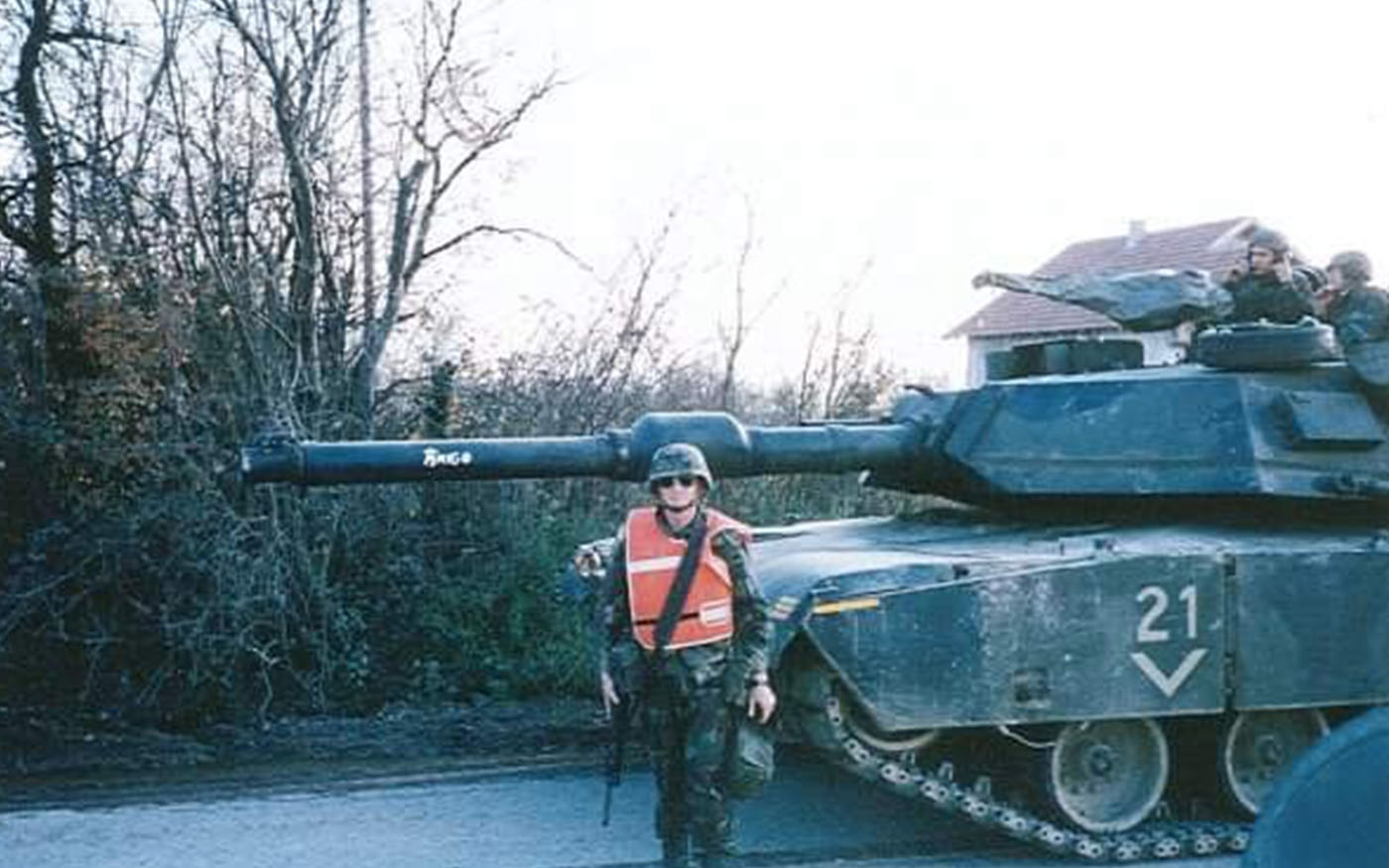
After sustaining injuries during active duty in Bosnia, Hightower found himself falling into a deep depression, seeking relief from his PTSD through abusing medication and alcohol. On the verge of divorce, in a deep crisis, he attempted to take his own life. At that moment, the gun would not fire. Hightower recalls, “God refused to let the round go off. And so, since God stopped the round from going off, I've served him ever since. I've never turned my back on him.”
Determined to follow God’s leading, Hightower pursued a call to ministry. Five years ago, while serving as pastor of a church, he began to realize the need for a dedicated ministry to reach veterans and first responders. He started volunteering with an organization called BattleForged Nation, where he remains on the board.
Two and a half years ago, Hightower felt that he needed to serve in this role full-time as a chaplain with the Assemblies of God.
“I wanted to make sure that there was somebody out there representing veterans and first responders” Hightower says. “Believe it or not, most people don't understand that just since 9/11, there have been over 8 million veterans [getting] out of the service. If you go back to the Vietnam era, there have been over 13 million. It's a pretty substantial people group, and there wasn't anybody really representing them.”
With this realization, Hightower created Warriors First, offering support through community dinners, connection to local resources, help with paperwork and applications for benefits, and immediate contact and intervention for those at risk of suicide. Hightower has met with thousands of veterans and first responders through outreaches, and he estimates that in the past two years, he has directly intervened in preventing nearly 70 veterans from taking their own lives.
Hightower says that when veterans return home, they often struggle with the transition back into their communities. It can be an incredibly lonely journey, especially when dealing with PTSD. While some veterans and first responders have support systems, many do not. He often encounters service members who are struggling, but they either do not know what resources are available or they are ashamed to seek help.
“We need to help our heroes and put them in a place of honor. I want to make sure that, number one, we're not losing them to suicide. Number two, we're trying to show them that PTSD is not shame” he says. “It's a scar, and just like any other scar from war, we can overcome it and then later talk about it and understand that it's a testimony that we can share with others.”
Hightower also says that he encounters many homeless men and women who are veterans, and he assists them in finding housing, medical care, and community.
“The reason we have the freedom we have is because of those men and women who chose to raise their right hand and give their lives and put their life on the line. They are now homeless, and they're not getting the benefits that they deserve” he says.
Hightower’s ministry not only seeks to connect veterans to local resources for physical and mental health, but also to help them become thriving members of their local communities.
“When veterans go back into the civilian world, they don't know how to go back to the way they were” he says. “They don't fit the mold. A veteran is trained to lead. That's what they do. And so, if we can get that plugged into the church, imagine what we could do to a community. They could turn it upside down for God.”
K.C. Harryman, a veteran of the U.S. Army who now pastors in Strafford, Missouri, has served alongside Hightower. He recalls a soldier that was struggling with his mental and spiritual health that he and Hightower drove a long distance to visit. While ministering to the individual in a local coffee shop’s prayer room, they were able to lead him in the sinner’s prayer and witness new life restored to, what Harryman describes as, his “tormented” and weary soul.
“It was obvious the Holy Spirit was giving us revelation as we ministered to our friend,” Harryman says.
While Hightower is willing to drive any distance to support veterans and first responders, he also recognizes that the need is too great to carry the ministry alone. His goal is to create a web of churches that he can call on to reach local veterans.
He begins by speaking at a church and sharing about the need for ministry to service members, which is then followed up by offering training to members of the church who are veterans. Those small groups can then seek out local veterans and first responders in the area who need support. Hightower utilizes a program called Reboot, which is a 12-week course specifically designed for service members to learn how to process PTSD and move forward.
As the support system grows, Hightower hopes that more veterans are able to receive the care, support, and place in the community that they need.